


Easy Drum - Real Music Drum
4.738.00 Reviews
App Specs
- Version
- 1.17.2
- Updated On
- License
- Free
- Downloads
- 1,000,000+
- Developer
- AVA GAMES
- Categories
- Music
- Platform
- Android
Screenshots
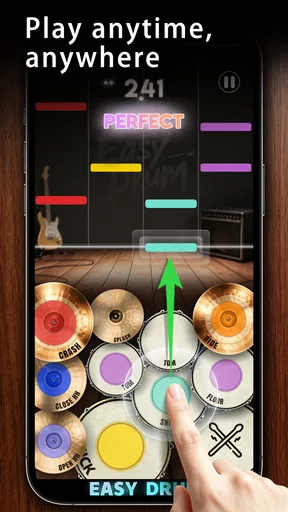
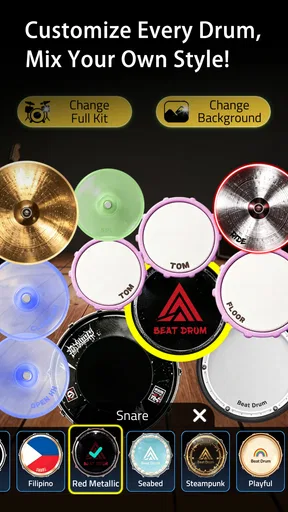
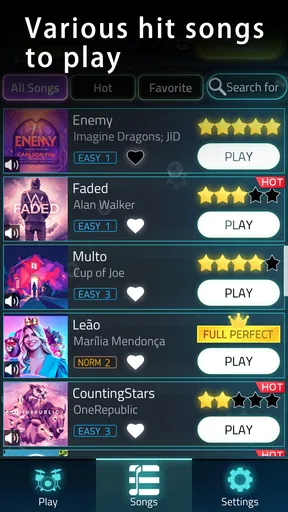
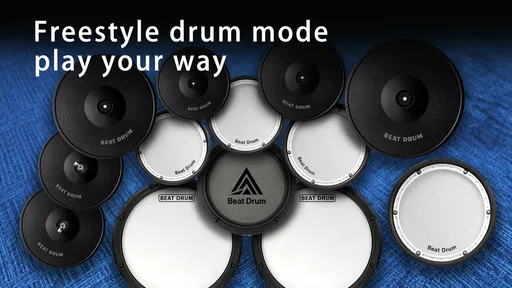
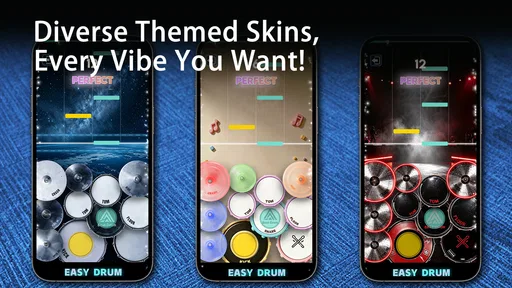
 Analysis by AppCompare
I can see the appeal of Easy Drum within a few minutes: it turns a phone into a place to tap out drum parts without asking me to own a kit, set one up, or already know how to play. As a music game from AVA GAMES, it suits quick sessions when I want to follow a beat and feel involved in a track rather than listen passively. The first impression is inviting, but the more useful question is whether that simple pleasure holds up after the novelty wears off.
A low-pressure first week
The basic idea is easy to grasp: listen to a track and play along by tapping the drum parts. That makes Easy Drum a low-pressure starting point for someone curious about rhythm games or drumming, including players who do not read music. I would hand it to a friend who wants a short, musical distraction, not a lesson plan or a realistic practice room.
Its strongest first-week use is fitting into small gaps. A few minutes between errands, a quiet break, or a short wind-down at home are all reasonable moments to open a rhythm game. The phone is already there, and the activity has a clear focus: pay attention to the music and respond. That immediacy matters more to casual players than a long tutorial or a complicated setup.
There is also a pleasant difference between tapping along to a song and simply listening to one. Even a simple rhythm asks me to anticipate the next beat, keep time, and recover when I miss a cue. I find that active element more engaging than a passive music app, while still being much less demanding than learning a full instrument.
The game is rated for Everyone, which makes it broadly approachable as a casual activity. I would still consider the setting and the person playing: rhythm games rely on attention to sound and timing, so they are best enjoyed somewhere the player can focus on the music rather than in a noisy or distracting situation.
What makes a short session satisfying
For me, the useful test is whether I can enjoy a session without turning it into a project. Easy Drum’s premise supports that kind of quick return: choose to play, engage with a track, then put the phone away. It is not something I need to schedule or prepare for, which gives it an advantage over a drum kit or a structured course when all I want is a little musical interaction.
A practical tip is to begin with the goal of keeping a steady pulse rather than chasing a perfect run. If I focus on staying with the music, a missed tap becomes a small stumble rather than a reason to quit. That approach makes the opening sessions more forgiving and helps me decide whether I enjoy the core activity before investing more time in it.
Worth Reading Before You Choose

Switching to Android Auto Means Rethinking Your Driving Routine

Google Calendar Makes a Crowded Week Easier to Manage

Baby Panda World Brings Quick Play to Modern Phones, but Its Game Library Feels Busy

ESPN’s Live Game View Makes Following Close Games Easier

QuizzLand Review: A Good Fit for Short Trivia Breaks, Not Every Player

Basketball Stars: Multiplayer Is Fast, but Can It Recover When Matches Go Wrong?
Easy Drum has a 4.7 average from around 15,000 ratings, and it has passed one million installs. Those figures suggest that many players find the simple rhythm-game pitch appealing. They do not tell me whether every player will enjoy repeating the same kind of interaction, though; that depends much more on how much I like tapping along to music than on the size of the audience.
Whether the rhythm keeps its appeal
Month-to-month value depends on whether playing along remains enjoyable after the first burst of curiosity. A music game can become part of a small routine if I like the feeling of keeping time and want a quick challenge. It is less likely to stick if I am mainly looking for a wide range of musical discovery, deep instrument practice, or a game with a story and changing objectives.
That distinction is important when comparing Easy Drum with the usual alternatives. A streaming service is better when I want to browse music and listen without concentrating. A metronome or dedicated learning tool is a better fit when I want deliberate practice and feedback aimed at improving technique. A more elaborate rhythm game may suit me better if I want a broader progression system or more variety in play. Easy Drum occupies the simpler middle ground: music is the focus, but I take part rather than just press play.
One way to judge its recurring value is to notice what brings me back. If I open it because I want to tap along and get absorbed in timing, it is doing its job. If I keep opening it only out of habit, while the sessions feel interchangeable, that is a sign the novelty has faded. I would not mistake a familiar routine for lasting enjoyment; the question is whether the act of playing still feels good.
For a casual player, repeating a comfortable activity can be a strength. I do not always want a game that demands progress or a long commitment. A short rhythm session can offer a clear beginning and end, which makes it easier to fit around work, study, or household tasks. On the other hand, a player who wants constant new goals may find that this straightforward premise has a ceiling.
Making room for a useful habit
I would make the game part of a specific moment rather than leave it as an app I open whenever I am bored. For example, a brief session after dinner can be a more satisfying routine than playing in distracted bursts throughout the day. Tying it to a predictable pause gives the music a little attention and makes it easier to tell whether I genuinely look forward to returning.
Another useful approach is to alternate it with listening rather than treating it as a replacement for music discovery. I might first listen to a track, then come back when I want to engage with the beat. That small change in purpose can keep a rhythm game from feeling like another feed to scroll through. It also clarifies what I value about Easy Drum: participation, not an all-purpose music library.
I would also be realistic about the difference between game skill and drumming skill. Tapping accurately to a track can sharpen my sense of pulse and timing, but it is not the same as coordinating a physical drum kit, learning technique, or practicing with other musicians. If my goal is to become a drummer, I would use this as a playful supplement, not as my main training method.
When the everyday setting matters
A realistic use case is a short break at home when I have enough quiet to hear the track and can give the timing my attention. If I only have a few minutes, I would open it for one focused session rather than try to squeeze in play while walking, carrying groceries, or doing another task. The tapping may be simple, but divided attention can turn a musical challenge into frustrating guesswork.
That also helps answer whether it works as background entertainment. I would not treat it like music playing behind chores: the point is to respond to what I hear, so the game asks for more involvement than a playlist. For a shared living space, headphones can make the session more considerate, while a quiet environment makes it easier to follow the beat. If neither is practical, saving the session for later is better than blaming the game for a poor fit.
Keeping the app and the habit low-friction
Maintenance is one of Easy Drum’s practical advantages as a phone game: there is no physical kit to assemble, tune, or store. The developer is AVA GAMES, and the current version is 1.17.2. I would keep the app updated through the normal app-store process, but I would not treat version changes as a reason to expect a particular new feature or a different experience.
The more relevant maintenance question is whether it earns space on my device. If I play it regularly in short sessions, keeping it installed makes sense. If I go weeks without wanting to tap along, removing it is a sensible choice; there is no benefit in letting a novelty occupy attention just because it once felt fun. That is a simple but useful test for any casual game.
Easy Drum is free to download, with in-app purchases ranging from $0.99 to $5.99 per item. I would start with the free experience and decide whether I actually return before spending anything. That is especially sensible for a game whose appeal depends on personal enjoyment of rhythm play. A purchase is only worthwhile if it adds something I actively want, rather than being an impulse made during the first session.
For parents or anyone sharing a device, the Everyone rating is a helpful starting point, and it is still wise to check purchase settings before handing a phone to a child. The available age rating does not remove the need for ordinary care around in-app spending. This is not a reason to avoid the game; it is a practical way to make a free-to-try app stay within the expectations of the person paying for the device.
Where repetition can set in
The same simplicity that makes the first sessions accessible can also become the main source of fatigue. A player who wants to discover new music, build skills in a structured way, or see a noticeably different challenge each time may find the central action too narrow. I would not recommend it as a substitute for a full rhythm-game catalog or a dedicated music-learning app if those are the reasons someone is looking.
There is also a personal limit to how often I want to repeat a tapping activity. If I play while distracted, the music and timing can lose their appeal; if I focus, the session feels more engaging but also asks for more attention than casual background listening. That trade-off is normal for a rhythm game, but it means Easy Drum may not fit every mood. When I want to relax without doing anything, a playlist is the better choice.
Device compatibility is another basic point to check before installing: the game requires Android 7.0 or later. That makes it unsuitable for a phone that does not meet the minimum system requirement. The game is free, but the optional purchases are worth keeping in mind if I prefer to avoid in-app spending altogether.
Who is likely to keep playing?
I would keep Easy Drum around if I enjoy music-based games, like responding to a beat, and want something I can pick up without a long warm-up. It is particularly suited to casual players who value a short, focused activity over a sprawling game. A person who has never touched a drum kit can still appreciate the timing challenge, while an experienced musician may enjoy it as a light diversion rather than serious practice.
I would skip it if I need a realistic drumming simulator, a reliable path to learning an instrument, or a music service built for browsing and listening. Those needs call for different tools. I would also be cautious if I already know that repetitive tapping games lose their charm quickly for me; in that case, the low barrier to entry may not be enough to make it a lasting habit.
Overall, I see Easy Drum as a pleasant, focused music game whose value comes from how easily it turns a spare moment into an active one. It does not need to become a daily ritual to be worthwhile, and it should not be judged as a replacement for lessons or music discovery. If I still enjoy keeping time with it after the initial curiosity passes, it has earned a place on my phone. If not, it has at least made clear what I was looking for: a rhythm challenge, a learning tool, or simply a good song to hear.
Pros
- Responsive touch controls make it easy to play rhythms on a phone or tablet.
- A virtual drum kit offers a convenient way to practice without physical equipment.
- Useful for experimenting with beats and basic drumming patterns on the go.
- Simple layout helps beginners get started without a complicated setup.
- Can provide a quick
- casual music-making activity whenever you have spare time.
Cons
- Small screens may make precise hits difficult
- especially during faster rhythms.
- Touchscreen playing does not reproduce the feel of real drumsticks or drum heads.
- Sound quality depends on your device’s speakers or connected headphones.
- May offer limited value for experienced drummers seeking advanced practice tools.
- Playing aloud can be disruptive in quiet settings without headphones.
FAQs for Easy Drum - Real Music Drum
What is Easy Drum - Real Music Drum?
Easy Drum - Real Music Drum is a mobile drumming app designed to let you play a virtual drum kit on your phone or tablet. You tap the on-screen drums and cymbals to create rhythms, practice beats, or simply experiment with sounds. It can be useful for casual music-making and learning basic coordination, though it does not replace the feel or full capabilities of a physical drum set.
Is Easy Drum - Real Music Drum suitable for beginners?
The app can be approachable for beginners because you can start tapping without owning a drum kit or knowing music theory. It may help you explore basic rhythms and become familiar with the roles of different drum sounds. As with any touch-screen instrument, accuracy depends on your device’s screen size and responsiveness, so beginners should treat it as a convenient practice aid rather than a complete drum-training course.
Can I use Easy Drum - Real Music Drum without an internet connection?
Basic virtual-instrument features may work offline once the app is installed, but availability can depend on the version and the specific feature you want to use. Online content, advertisements, updates, or other connected services may require internet access. Check the app’s current store listing and its permissions before downloading, especially if offline use is important or you plan to use it while traveling.
Is Easy Drum - Real Music Drum free to download, and does it include ads or in-app purchases?
The app’s price and monetization can vary by platform, region, and release version. A free download does not necessarily mean that every feature is free; the app may display advertisements or offer optional purchases. Review the Google Play Store or Apple App Store listing for the latest pricing, in-app purchase details, and user feedback before installing, and check purchase controls if children will use the device.
What should I check before installing Easy Drum - Real Music Drum?
Before downloading, confirm that your device meets the app’s current operating-system requirements and has enough storage. Also review the store listing for recent updates, permissions, privacy information, and compatibility with your phone or tablet. Touch controls are central to the experience, so a responsive screen and a comfortable display size can make playing easier; headphones may also help you listen without disturbing others.


